U.S. Tariffs Hit Highest Level Since 1933 — August Actions Mark Another Escalation

U.S. Tariffs Hit Highest Level Since 1933 — August Actions Mark Another Escalation
On August 8, 2025, the United States crossed another milestone in what has become the most aggressive tariff environment in nearly a century. The new measures build on a series of sweeping trade actions this year, driving the average applied tariff rate from 2.5% in January to 18.6% in August. This dramatic shift sets the stage for a year marked by aggressive policy maneuvers, sector-specific shocks, and mounting global tensions.
A Year of Rapid Escalation
2025 has been defined by a two-pronged approach to tariff policy: emergency power-driven hikes targeting strategic trading partners and across-the-board reciprocal tariffs aimed at closing perceived trade imbalances. The result is a complex, high-impact tariff regime touching nearly every sector and country.
February – IEEPA Emergency Tariffs
Invoking the International Emergency Economic Powers Act (IEEPA), the administration imposed steep hikes on several key partners:
-
Canada: From 25% to 35% (as of August 1)
-
Mexico: Held at 25%
-
China (including Hong Kong): From 10% to 20%
April – Reciprocal Tariffs
In April, a universal 10% baseline tariff was layered on all imports, with additional country-specific surcharges based on trade deficits and tariff asymmetries:
-
Brazil: 50%
-
EU: 30% (some goods capped at 15%)
-
Japan: 25%
-
Vietnam: 46%
-
India: 26%
-
…and a long list of other nations seeing increases ranging from 20% to nearly 50%.
Sector-Specific Pressure Points
Certain industries have been singled out for especially steep penalties:
-
Steel, Aluminum, and Copper: 50%
-
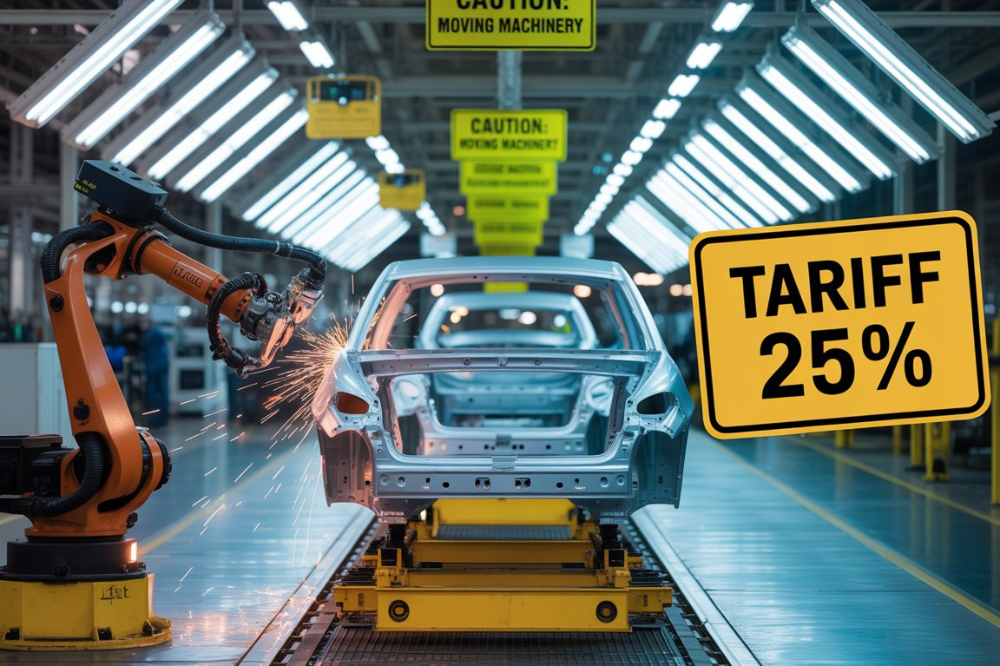
Automobiles & Auto Parts: 25%
-
Semiconductors & Pharmaceuticals: Newly introduced rates vary by product
The August 8th Activation
The latest wave of tariffs activated August 8th primarily extended emergency measures and adjusted rates upward in targeted sectors. These moves are widely interpreted as both economic leverage and political signaling in the lead-up to trade negotiations set for this fall.
Markets reacted immediately, already jittery from the August 1st market slide and a disappointing July jobs report (just 73,000 jobs added). The S&P 500 and Dow saw additional intraday volatility, reflecting investor uncertainty over corporate earnings and consumer demand.
Economic Fallout
The effects of this tariff regime are increasingly visible:
- Consumer prices are up 1.8% overall, with specific categories surging — motor vehicles (+12.4%), shoes (+39%), and apparel (+37%).
- The average household is estimated to lose $2,400 annually in real income.
- GDP growth is projected to slow by 0.5 percentage points per year in 2025 and 2026.
- Unemployment is expected to rise 0.3 points by year-end.
At the same time, the administration projects $2.7 trillion in tariff revenue between 2026 and 2035 — a figure supporters cite as a long-term economic offset.

Political and Legal Challenges
The political backlash is mounting. At least seven federal lawsuits now challenge the administration’s use of IEEPA for broad tariff expansion, with plaintiffs arguing this is an overreach of executive authority. The firing of the Bureau of Labor Statistics commissioner on August 2nd — following accusations of manipulated jobs data — has further fueled the debate over transparency and governance.
Outlook
The August 8th tariff activation is not a one-off event; it’s the latest step in a sustained and expanding trade strategy. For importers, exporters, and consumers, the message is clear: volatility is the new normal, and the policy direction remains firmly toward higher barriers. The coming months will reveal whether these tariffs become a lasting feature of U.S. trade policy, or a high-stakes bargaining chip in a shifting global economic game.