January 2025 Newsletter
2025 Industrial Real Estate Trends: What to Watch
Welcome to the first edition of our 2025 newsletter where we explore key trends shaping the industrial real estate sector in the year ahead. There are many variables that affect industrial real estate, and here we are going to touch on some key things that we believe will shape 2025. Here’s what industry professionals and market analysts are focusing on as we step into the new year.
1. Supply-Demand Imbalance
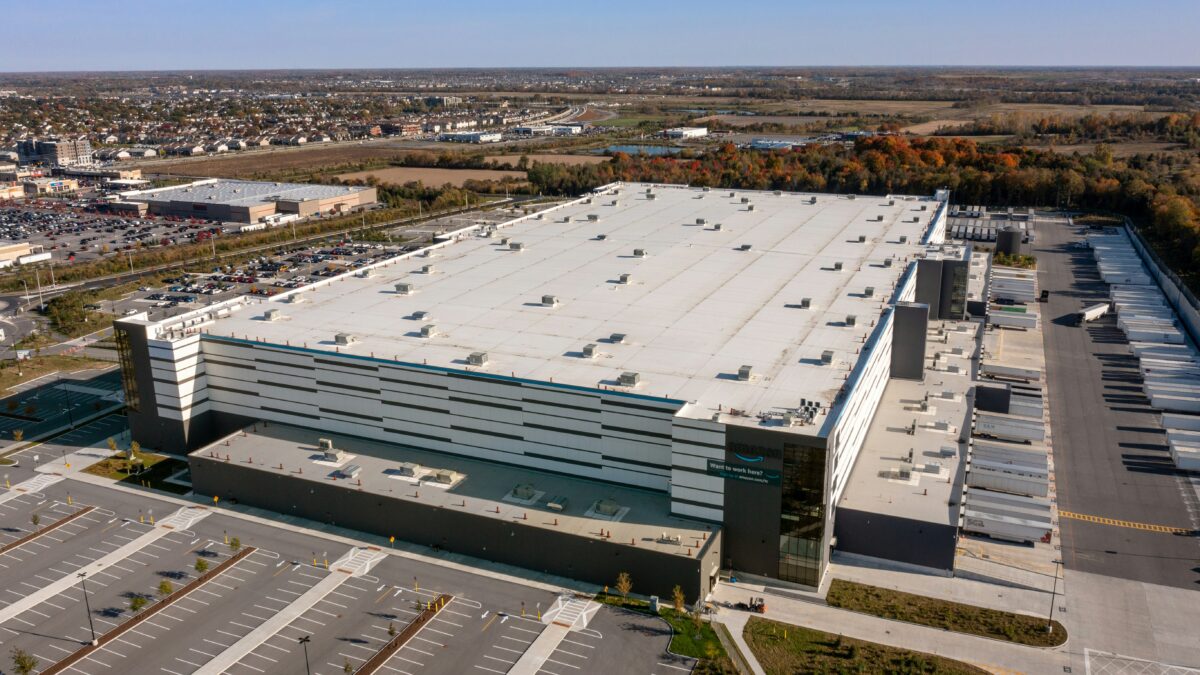
The industrial real estate market is at an inflection point. While large distribution centers are seeing a slowdown in rent growth due to oversupply, light industrial spaces remain robust, driven by localized demand and lower availability. Developers are becoming more selective, focusing on markets where supply-demand dynamics favor stability.
There was a significant slowdown in new supply throughout 2024 with only 330.7 million square feet delivered through November, compared to 630.3 million square feet coming online in 2023. We project to see construction of buildings less than 500,000 square foot continue this year.

2. Persistent E-commerce Growth
E-commerce continues to shape the industrial landscape. According to industry estimates, every $1 billion of new e-commerce sales growth requires 1 million square feet of additional warehouse space. By 2026, total U.S. e-commerce sales are forecast to exceed $1 trillion, which is double the $500 billion from 2018. This trend is also pushing retailers to embrace omnichannel models, blending online fulfillment with physical store networks.
E-commerce has a significant impact on industrial real estate leasing. In North America, e-commerce accounted for approximately 15.3% of the big-box industrial property space leased in 2023. The estimated percentage of industrial real estate leasing attributed to e-commerce in 2024 is projected to be around 20%. Though we do not believe we will see the highs of 40% as we did during the pandemic, we expect this upward trend to continue through 2025.
3. Near-Shoring and Manufacturing Resurgence
Geopolitical and economic factors are fueling the near-shoring movement. Businesses are relocating manufacturing operations closer to home, especially to regions near U.S. borders, spurring demand for industrial properties with heavy power capacity and infrastructure. The Midwest is particularly benefiting, with significant investments in EV and semiconductor manufacturing. Potential trade tariffs may also play a role in shaping new trade routes to accommodate manufacturing in South America.


4. The Data Center Boom
The relentless growth of data centers continues, fueled by technological advancements and the increasing influence of AI. However, not all municipalities are embracing this expansion. Cities like Atlanta are pushing back, prioritizing housing and urban development over sprawling data facilities. Despite local resistance in certain areas, the sector remains primed for further expansion with substantial investments targeting less restrictive markets.
With the rapid acceleration of data center developments, power capacity is becoming as critical as geographic location in site selection. The demand for "powered land" is surging particularly. Sites with access to reliable, high-capacity energy sources are commanding premium pricing. This paradigm shift highlights the growing influence of AI, cloud computing, and automation in industrial operations.
The premium pricing for “powered land sites” is creating additional challenges for developers seeking distribution land. As power-driven site selection tightens the market, the industrial sector faces increased competition for strategic parcels, further emphasizing the importance of early market engagement and site control strategies.
Looking Ahead
The industrial real estate market is navigating a dynamic landscape. While challenges like regulatory hurdles and economic uncertainties persist, the sector's resilience lies in its ability to adapt to changing demands. From near shoring to e-commerce growth, 2025 promises to be a pivotal year for innovation and strategic investments.
Stay tuned for deeper dives into these trends and more updates throughout the year. Let’s make 2025 a year of informed growth and opportunity!
What trends are you keeping an eye on this year? Share your thoughts with us!