April 2026 Newsletter
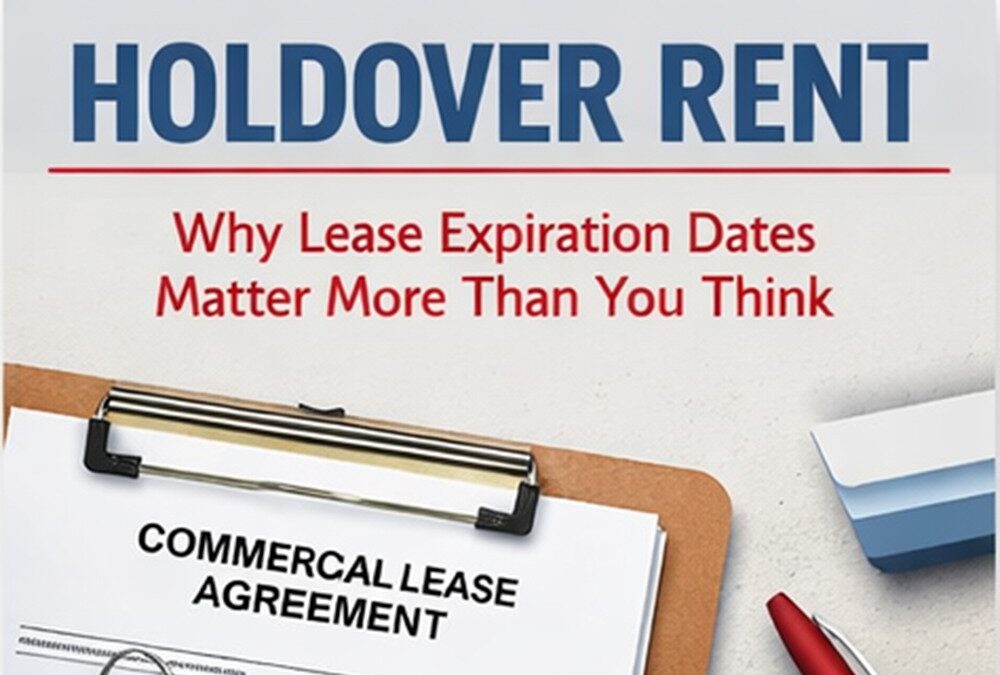
Understanding Holdover Rent:
What It Is, Why It Exists, and How to Avoid It
What Is Holdover Rent?
Holdover rent applies when a tenant remains in a space after the lease term has expired without a new lease or renewal agreement in place.
Instead of paying the normal contracted rent, the tenant pays an increased rent amount, usually calculated as a percentage of the prior rent, on a month-to-month basis until one of two things happens:
- A new lease or renewal is executed, or
- The tenant vacates the space
Is Holdover Rent a Penalty?
Despite how it feels, holdover rent isn’t intended to be punitive. Its true purpose is incentive and clarity.
From a landlord’s perspective, holdover rent:
- Encourages timely decision-making
- Prevents tenants from lingering indefinitely without a long-term plan
- Creates urgency to either renew, renegotiate, or relocate
It’s similar in concept to other contractual provisions that exist to motivate resolution rather than prolong uncertainty. Simply put, holdover rent brings both parties to the table and keeps the clock moving.
What Is a Reasonable Holdover Rent?
In most industrial leases, holdover rent commonly falls within a predictable range:
- 125% of base rent – Tenant-friendly, lower end
- 150% of base rent – Middle ground and very common
- 200% of base rent – Aggressive, but not unusual
From a tenant’s standpoint, 150% is often viewed as a fair compromise. If you can negotiate the rate closer to 125%, you’re in a strong position. At the upper end, the increased cost can escalate quickly and create real financial pressure.
The key takeaway: holdover rent is negotiable, especially when addressed early.
Why Holdover Rent Becomes a Problem for Tenants
The issue is rarely the clause itself — it’s timing.
Too often, tenants wait until the final few months of their lease to think about renewal or relocation. At that point:
- Leverage is limited
- Options are fewer
- Holdover rent becomes much more likely
By contrast, tenants who plan can manage holdover exposure—or avoid it altogether.
How Tenants Can Protect Themselves
A few proactive steps make all the difference:
1. Start renewal discussions early
For many industrial users, starting these discussions 9–12 months ahead of lease expiration is ideal.
2. Understand the holdover clause before it matters
Know the percentage, the terms, and how long it can apply.
3. Discover options early
Exploring alternatives strengthens negotiating leverage.
4. Avoid “accidental” holdovers
Month-to-month rent at 150%–200% should be a last resort, not a default plan.
When tenants are proactive, holdover rent becomes a manageable business term instead of an emergency.
Final Thoughts
Holdover rent isn’t designed to punish tenants. It exists to create urgency and clarity.
When properly understood and planned for, it’s just another lease provision that can be negotiated, managed, and often avoided. When ignored until the last minute, it can become expensive very quickly.
If your lease expires within the next year and the conversation hasn’t started yet, now is the time to get the ball rolling!
And remember: every deal is different, so stay informed.