August 2026 Newsletter
The Warehouse Floor | August Edition
Before You Sign That Lease: Insurance Risks Every Industrial Occupier Should Consider
When evaluating a warehouse or manufacturing facility, most occupiers focus on rent, location, loading capabilities, ceiling height, and labor access. Those are all critical factors, but there is another major occupancy cost that often receives attention too late in the process: commercial insurance.
For many industrial users, insurance becomes a discussion after a lease is signed or a purchase agreement is executed. Unfortunately, that's often when surprises emerge.
Insurance Requirements Are Changing
One common trend across the current industrial market is a steady increase in insurance requirements from landlords. What used to be a standard $1 million liability requirement is increasingly becoming $2 million, $3 million, or even $5 million for larger facilities or higher-risk operations.
The challenge is that simply obtaining the required coverage limit doesn't always mean you're adequately protected.
Many leases contain insurance provisions that can create obligations beyond what a policy actually covers. In some cases, a tenant may assume they are protected because they have insurance in place, only to discover that certain events, damages, or contractual responsibilities fall outside the scope of that coverage.
The takeaway: don't assume your lease and your insurance policy are saying the same thing.
The Building Matters More Than You Think
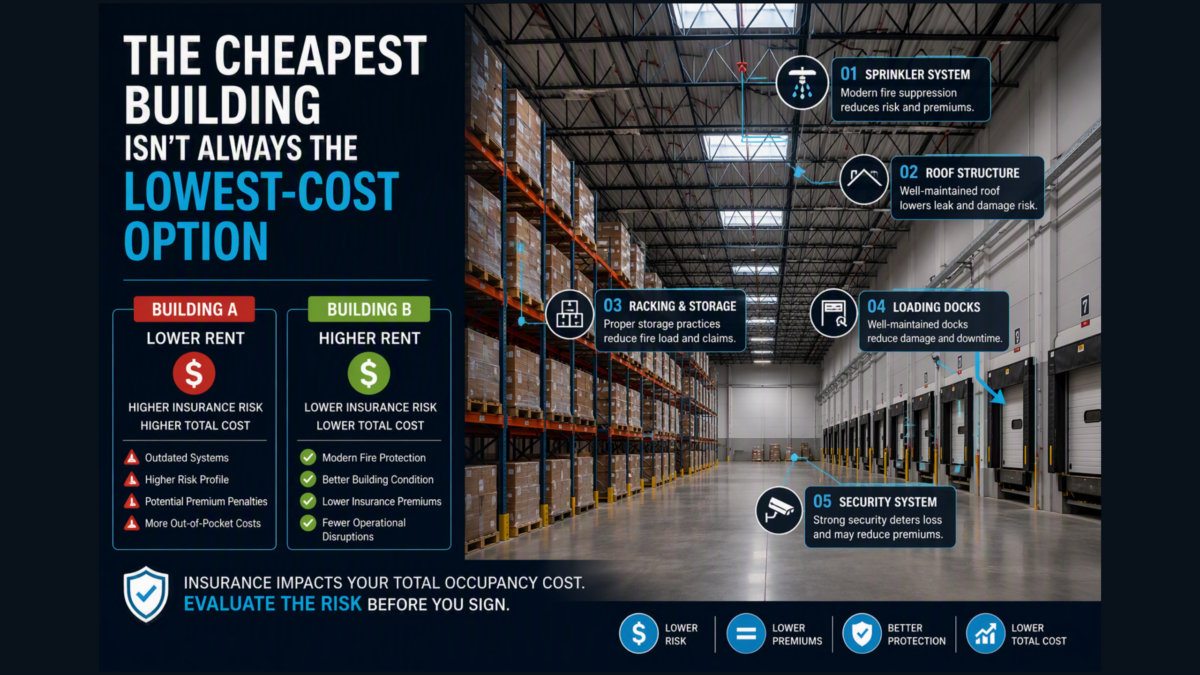
Not all industrial buildings are viewed equally by insurance carriers. Factors that can significantly impact insurability and premiums include:
- Building age
- Roof condition
- Electrical systems
- Fire suppression systems
- Security features
- Construction type
- Overall maintenance and condition
In some cases, an older building can still be insured without issue. The difference is often the premium. A property that qualifies for standard insurance markets may receive significantly different pricing than one that is pushed into a high-risk category.
Before committing to a facility, it's worth understanding whether the building itself could create insurance challenges that impact your total occupancy cost.
Sprinkler Systems Can Create Unexpected Expenses
One of the biggest issues for warehouse users involves sprinkler systems.
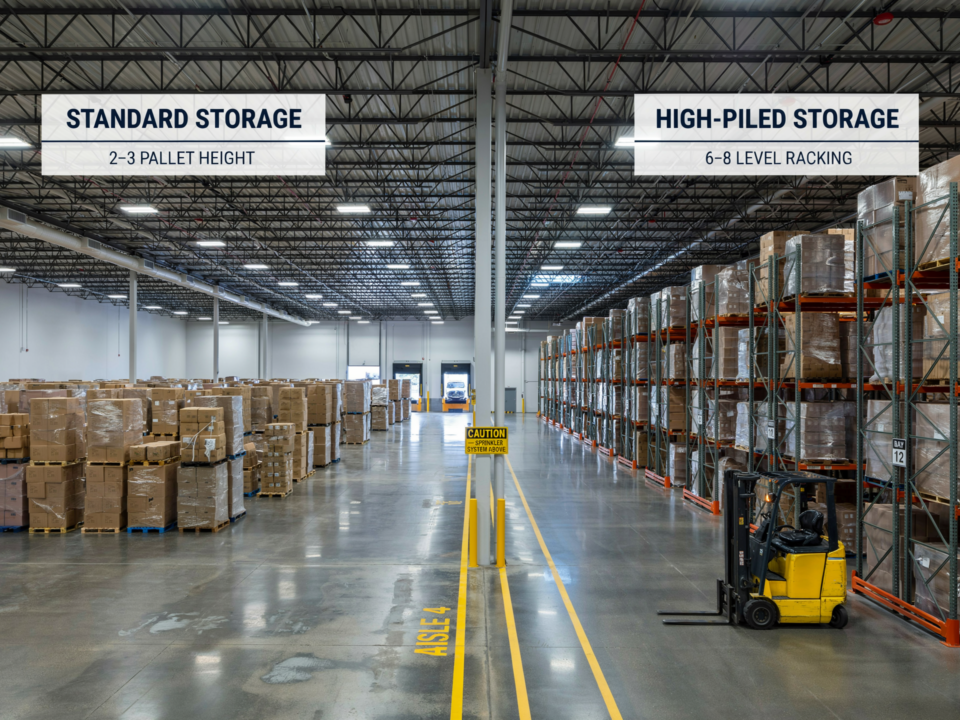
As inventory densities increase and storage configurations evolve, insurance carriers often take a closer look at fire protection capabilities. A warehouse that appears suitable operationally may require sprinkler upgrades before coverage can be obtained at acceptable rates.
In some situations, tenants discover they need expensive modifications, such as in-rack sprinkler systems, upgraded fire suppression components, or additional safety measures, after they have already committed to the space.
These costs can quickly exceed what many occupants budgeted for during site selection.
Business Interruption: The Coverage Many Companies Underestimate
Property insurance protects physical assets. Business interruption coverage protects the business itself.
If a fire, weather event, or other major loss shuts down operations, the real question becomes: How long can your business survive while you're unable to operate?
Business interruption coverage can help cover:
- Ongoing payroll expenses
- Lease obligations
- Fixed operating costs
- Temporary relocation expenses
- Additional costs required to resume operations
The challenge is that many companies underestimate how long recovery actually takes.
A disruption that appears manageable in six months can easily stretch into a year or longer once investigations, permitting, repairs, equipment replacement, and operational restart are factored into the timeline.
For manufacturers, distributors, and warehouse users with specialized operations, this coverage deserves careful attention.
Bring Your Insurance Advisor into the Process Early
One of the simplest ways to avoid costly surprises is to involve your insurance advisor before selecting a building or signing a lease.
Insurance should be evaluated the same way companies evaluate rent, taxes, utilities, and facility improvements. It is a real occupancy cost that can vary significantly from one building to another.
An early review can help answer questions such as:
- Will this building be difficult to insure?
- Are sprinkler upgrades likely?
- Do the lease requirements align with available coverage?
- Will insurance costs materially impact occupancy costs?
- Are there hidden risks that should be negotiated before signing?
The earlier those questions are answered, the more leverage an occupier has to make informed decisions.
Final Thoughts
Industrial companies spend significant time comparing lease rates, transportation access, labor availability, and facility specifications. Insurance deserves a seat at that table as well.
The right building is not just one that supports your operation. It's one that can be occupied, insured, and operated efficiently without unexpected costs appearing after the deal is done.
For occupiers, bringing your insurance advisor into the conversation early can help turn insurance from an afterthought into a strategic advantage.
And remember: every deal is different, so stay informed.