June 2026 Newsletter
The Warehouse Floor | June Edition
The Deal Isn’t Done Until You Can
Occupy the Building
One of the biggest misconceptions in industrial real estate:
“Once I sign the lease, I can move in.”
The truth? Signing the lease is just the starting line — not the finish line. The delay that quietly kills move-in timelines and budgets more than almost anything else isn't construction delays or slow landlords. It's the Occupancy Permit. And often, it catches people off guard because nobody planned for it early enough.
What Actually Triggers an Occupancy Permit?
Most warehouse users assume it only applies if they’re changing the use of a building. While that’s partially true, it’s not the full picture.
Here’s where it gets people:
You don’t have to change the use to trigger a new occupancy permit. You just have to change how the building functions.
The most common example?
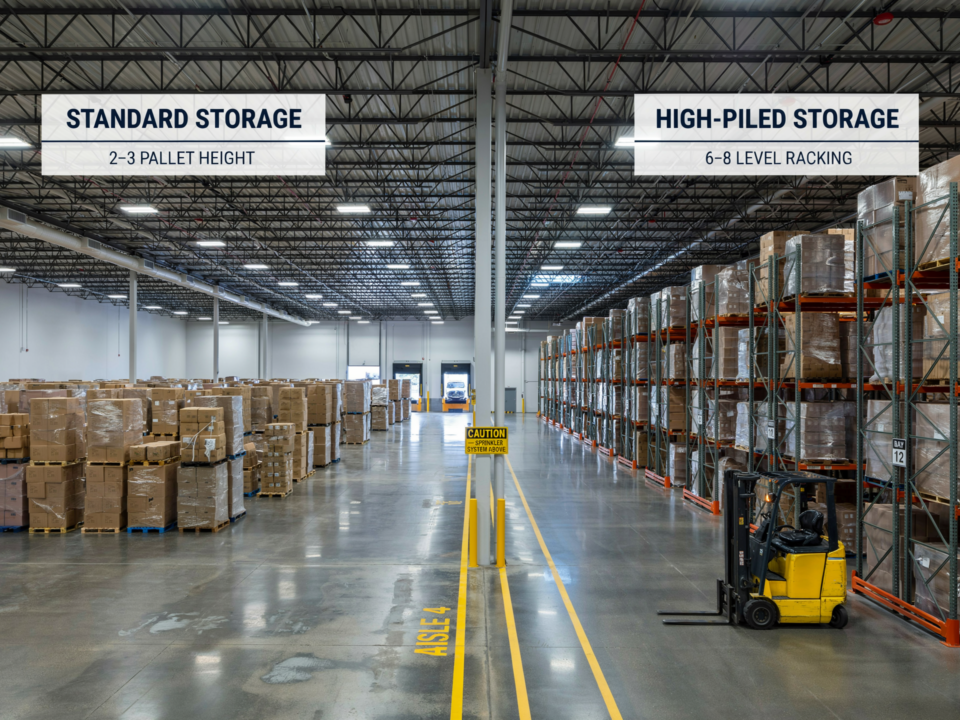
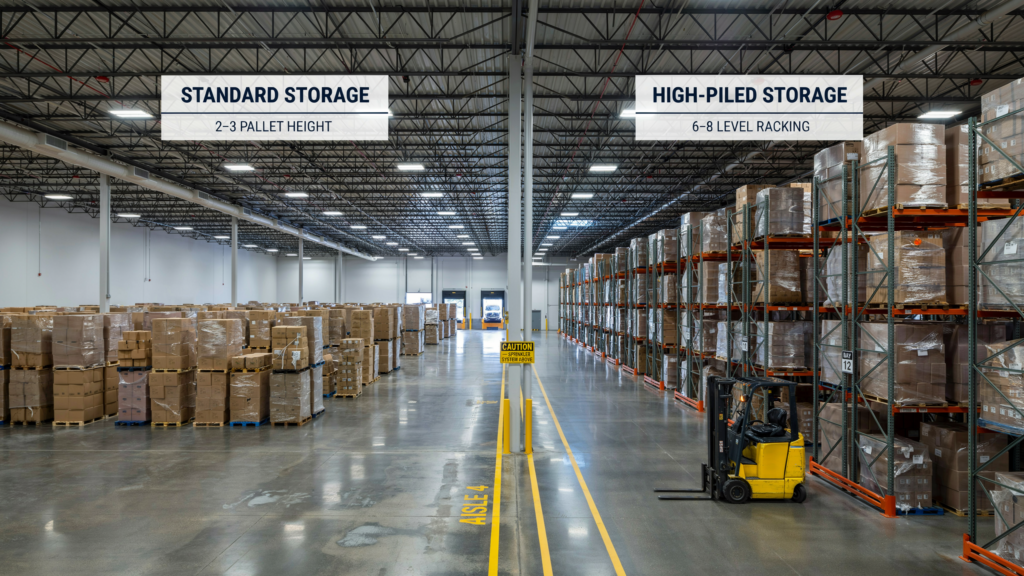
Racking.
- New layout = new aisle configuration
- New aisles = different egress paths
- Different egress = life safety review
At that point, the city and fire department need to review it. And now you’re in the permitting process… whether you planned for it or not.
Why Tenants Get Caught Off Guard
I see this all the time:
- Lease is signed
- Move-in is scheduled
- Operations are planned
Then the fire marshal shows up and says, “You can’t occupy this space yet.”
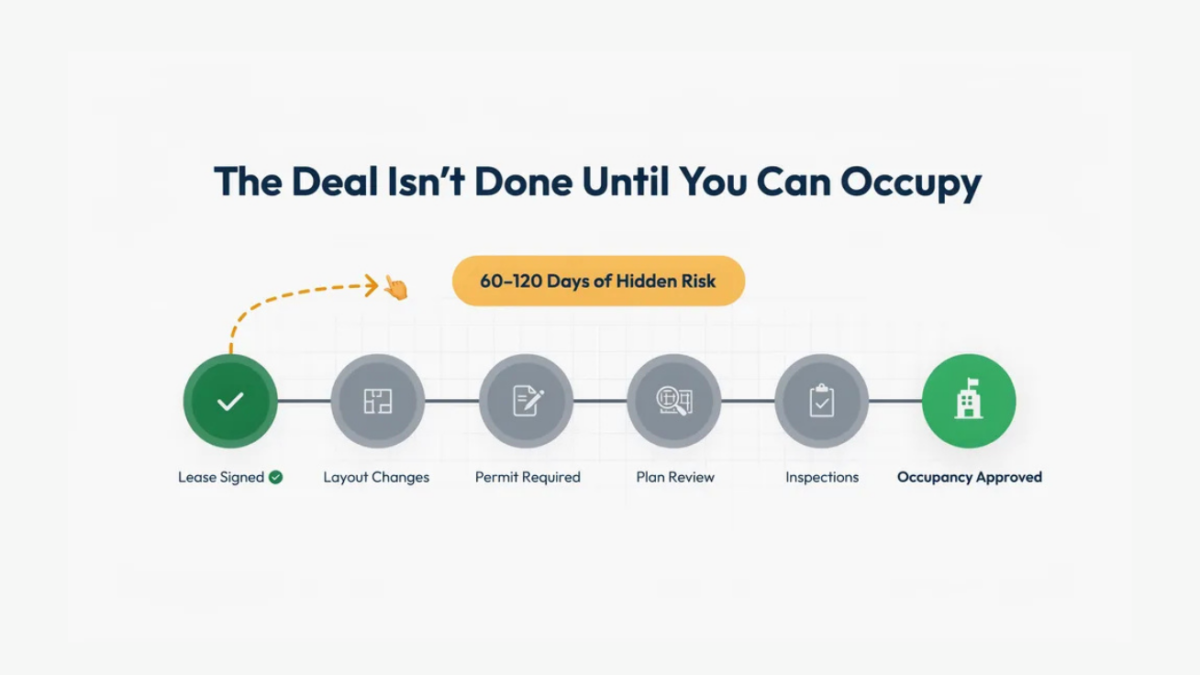
Now the tenant is scrambling. Because what they didn’t account for is the timeline that comes with an occupancy permit:
- Site visit and evaluation
- Design drawings
- Plan review
- Revisions (if needed)
- Final inspections
- Approval
That process can easily take: 60 to 120 days (or more)
And if you didn’t negotiate free rent, flexibility, and time, you’re paying for space you can’t use.
Who Is Responsible?
This part is straightforward but often misunderstood. The tenant is almost always responsible. Why?
Because the tenant is the one:
- Altering the layout
- Installing racking
- Modifying how the building functions
Now, depending on the deal structure (turnkey vs. allowance), the landlord may help, but the responsibility to trigger and complete the process typically falls on the occupant.
When Should You Be Thinking About This?
Not at lease signing. Not after lease signing. But during site selection. That’s the key distinction.
Because the moment you understand your layout, your racking plan, and your operational flow, you can start identifying whether a permit will be required. And more importantly, you can account for the timeline while you still have leverage.
Where Deals Break Down
Occupancy permits don’t kill deals on their own. Timing does.
Here’s the real-world impact I see:
- Tenant needs to be operational in 45 days
- Permit process takes 90+ days
- No rent abatement built into the deal
- No contingency planning
Now the tenant is:
- Paying rent
- Paying for storage elsewhere
- Disrupting operations
All because something predictable wasn’t addressed early.
How to Stay Ahead of It
This is avoidable with a little upfront planning. Here’s what I advise every client:
- Assume You’ll Need One
If you’re installing racking, changing layout, or modifying space, start with the assumption that an occupancy permit will be required.
- Validate Early
Before you commit to a building, review your layout, understand your racking heights, and talk through egress implications. This is where bringing in a design professional early pays off.
- Build It into the Deal
If there’s any permitting risk, negotiate for:
- Free rent during approval period
- Flexible occupancy timelines
- Contingencies tied to approvals
This is where you still have negotiating power. After you sign, you lose that leverage.
- Don’t Assume “It Was Fine Before”
Just because the last tenant used the building in a certain way, doesn’t mean you can.
- Different layout
- Different operation
- Different requirements
Every new user is reviewed on its own merits.
Final Thoughts
The occupancy permit isn’t a technicality—it’s a critical checkpoint. And in a lot of cases, it’s the difference between a smooth transition and a major disruption. Because in industrial real estate:
You haven’t really closed the deal until you can actually occupy the building.
If you’re evaluating space, or even just thinking about it, I’m always happy to be a resource. And if you know someone navigating these decisions, feel free to connect us.
The earlier we identify these issues, the more control you have to solve them. And remember: every deal is different, so stay informed.